30 June 2026
Google Ads Management in Egypt: When Does Your Company Need It?
This page presents “Google Ads Management in Egypt: When Do You Need It? | Al Shohab” and explains Google Ads Management in Egypt: When Does Your Company Need It?. The summary defines the page-specific scope and its practical context. Many companies in Egypt approach Google Ads with the idea that paying guarantees visibility. They launch a quick campaign, spend a budget and then wonder why results did not appear. Google Ads is a powerful growth tool, but it is not the right solution for every company or at every stage. The more important question is not “How do we run an ad?” but “When does our company genuinely need Google Ads management, and what makes a campaign succeed instead of draining the budget?” This practical guide explains Google campaign types, when they suit you compared with organic search optimization, the signs that the time may be right, the components of a successful campaign and how to avoid wasting money.
What Is Google Ads Management, and Why Is It Different from Simply Running an Ad?
Google Ads is a pay-per-click advertising system that lets you appear in front of people searching for your service or product at the exact moment they search. The difference between launching a temporary ad and professional Google Ads management is the difference between random spending and calculated investment. Management includes selecting the right keywords, excluding unprofitable terms, configuring targeting, improving landing pages, measuring conversions, and then continually adjusting the campaign based on data. Without this recurring cycle, the budget becomes clicks that never turn into customers.
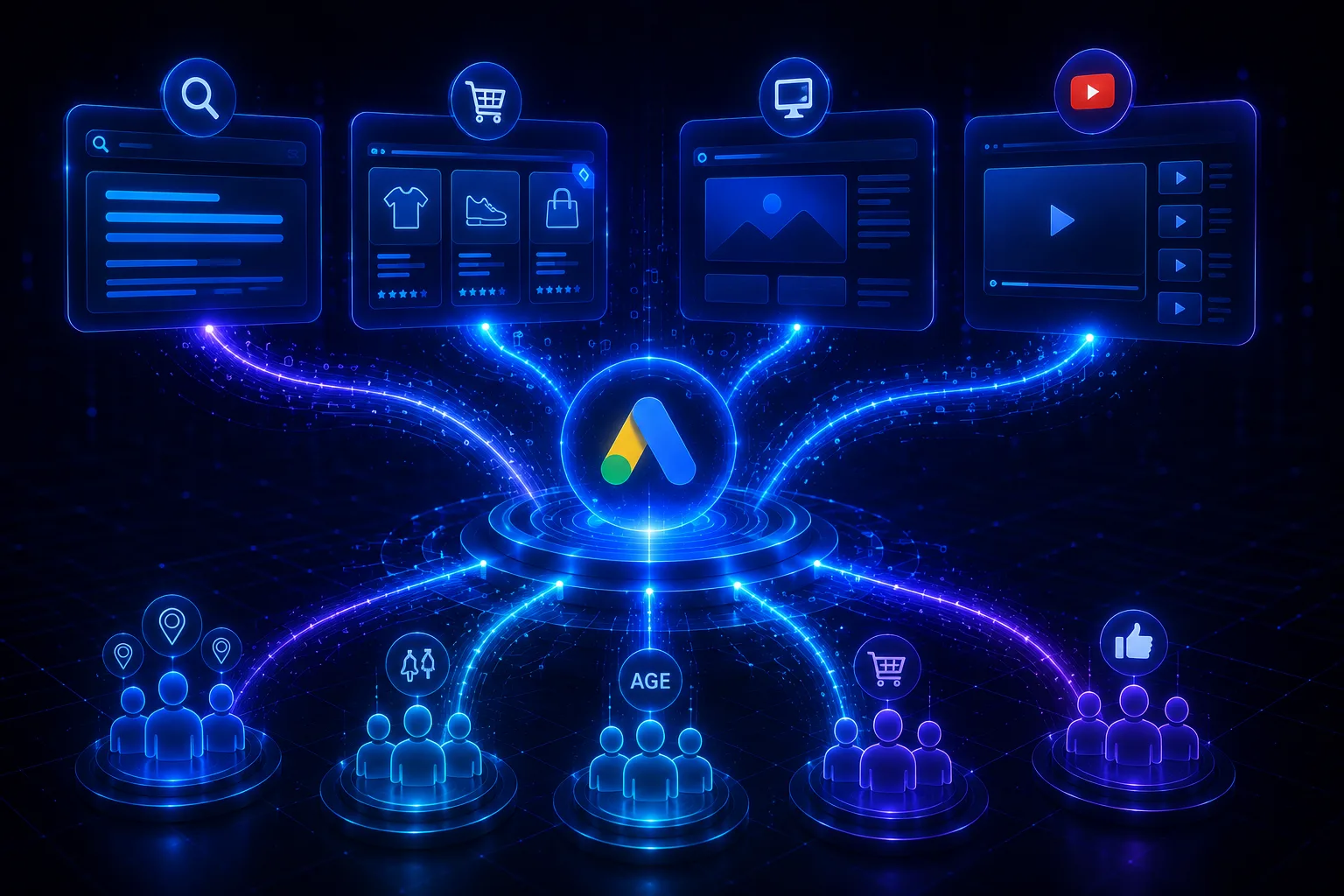
Google Campaign Types and Which One Suits Your Company
Choosing the wrong campaign type is one of the most common causes of wasted budget. Every type has a different objective, placement and audience.
Search Campaigns
Search campaigns appear as text above Google results when a user enters a term related to your service. They have the strongest purchase intent because they reach people who are actively looking for a solution and are suitable for services, quotation requests and consultations. If your objective is attracting customers ready to contact you, Search is the logical starting point for most companies in Egypt.
Display Campaigns
Display campaigns show visual banners across millions of Google partner websites and applications. Their purpose is to build brand awareness and retarget visitors who came to your website without completing an action. Their purchase intent is lower than Search, so they are suitable for introducing a new brand or reminding previous visitors, not for expecting immediate sales.
Shopping Campaigns
Shopping campaigns display the product image, price and store name directly in search results. They are ideal for online stores selling physical products. If you operate a store, connecting your online store to Shopping campaigns places products in front of buyers who can see the price and image before clicking, improving visit quality. They require organized product data and sound product pages to work effectively.
YouTube Campaigns
YouTube campaigns are video advertisements shown before or during YouTube videos. They suit companies that want to tell their story or explain a complex product visually. They require good video content and precise targeting. Their role is usually to build demand rather than capture it directly, so they work best within an integrated plan rather than alone.
Google Ads or Organic Search Optimization?
The question is not “Which is better?” but “Which suits your current situation?” Organic search optimization is a long-term investment that builds free, sustainable visibility in search results, but it needs months to produce results. Google Ads buys immediate visibility in return for a budget, bringing visits from the first day but stopping as soon as spending stops.
The practical rule is to use advertising when you need fast results or compete for keywords that will be difficult to rank for organically in the near term, while investing in SEO in parallel to reduce dependence on paid spending over time. More mature companies combine both: advertising captures immediate demand, while SEO builds a marketing asset that gradually lowers customer-acquisition cost.
Signs That the Time for Google Ads Has Arrived
Not every company is ready for paid advertising. These indicators suggest the time is right:
- You have a landing page or website that genuinely converts visitors, with a clear contact method and compelling offer, rather than only an information page.
- You are launching a new product, service or branch and need immediate visibility before organic search presence matures.
- There is clear demand for what you provide, meaning people are actively searching for terms related to your service in Egypt.
- You have a sales season or limited-time offer that you want to use quickly.
- You can respond to new customers quickly through message replies and request follow-up; advertising brings the inquiry, but follow-up closes the sale.
- You have a test budget that you can commit for several weeks without stopping after only a few days.
Components of a Successful Advertising Campaign
Campaign success does not come from budget alone, but from four essential elements working together.
Keywords and Match Types
Choose high-purchase-intent keywords directly related to what you sell and divide them into logical groups. Most importantly, configure match types and add negative-keyword lists to exclude searches that do not matter to you, such as “free” or “jobs,” so you do not pay for clicks that will never convert.
Geographic and Audience Targeting
Configure targeting only for areas you actually serve in Egypt—Cairo, Giza, Sheikh Zayed, 6 October, the Fifth Settlement and others—instead of wasting budget in locations your service cannot reach. Add audience layers and suitable timing for your business to focus spending on those most likely to buy.
Landing Pages
A large share of advertising budgets is wasted by sending clicks to the homepage instead of a dedicated page. A well-designed landing page aligns its message with the advertisement, loads quickly on mobile and presents a clear offer with one call to action. Matching the ad's promise to the page content is what turns a click into a customer.
Tracking and Measurement
Without conversion tracking, you are driving with your eyes closed. Enable measurement for important actions such as calls, messages, requests and purchases so you know which keyword and advertisement brings actual customers. You can then direct budget to what works and stop what drains it. Data-based decisions are the foundation of professional management.
How Do You Avoid Wasting the Budget?
Money is usually wasted in Google Ads because of preventable mistakes:
- Begin with a limited test budget on a small number of high-intent keywords and expand gradually based on what proves successful.
- Review negative-keyword lists continuously to exclude unprofitable searches that emerge over time.
- Do not send traffic to the homepage; use a dedicated landing page for every offer.
- Monitor the campaign regularly instead of leaving it to run alone, because the market and competition change.
- Measure actual return in customers and sales, not only clicks and impressions.
- Avoid rapidly increasing the budget before the learning phase stabilizes and the winning keywords become clear.
Questions to Ask Before You Begin
Before allocating any budget, answer these questions clearly:
- What is the campaign's specific objective: calls, messages, requests or online-store sales?
- Do I have a landing page or website that is genuinely ready to convert visitors?
- Who is my audience, and where are they located geographically within Egypt?
- Which terms do my potential customers use when searching?
- What test budget can I commit for several weeks?
- Can I follow up with new customers quickly?
- How will I measure campaign success, and which figure makes it worthwhile?
Conclusion
Google Ads is not a magic button. It is a growth tool that needs the right campaign type, precise targeting, a persuasive landing page and continuous measurement. Your company needs it when there is clear demand for your service, you want results faster than organic visibility alone can provide, and you have a way to turn visitors into customers. The smartest approach is always to combine paid advertising and organic search optimization in one plan. If you want to discuss your company's position and determine whether Google Ads is the right next step, contact us through the Contact page so we can build a plan suited to your objectives and budget.
Frequently Asked Questions
Quick answers to the most common questions about Google Ads management for companies in Egypt.
When Does My Company Need Google Ads Instead of Relying Only on SEO?
Google Ads is suitable when you need fast results, such as launching a new product or branch, serving a limited sales season, or competing for keywords that would take a long time to rank for organically. SEO is a long-term investment that builds sustainable free visibility, while advertising buys immediate visibility in return for a budget. The strongest approach combines both: ads for immediate demand and SEO to reduce dependence on spending over time.
How Much Budget Does a Google Ads Campaign Need in Egypt?
There is no fixed figure. The budget depends on your industry, keyword competition, target area and campaign objective. The practical rule is to begin with a limited test budget on a small number of high-purchase-intent keywords, then expand spending on what proves it brings actual customers. The important factor is not budget size but how efficiently it is allocated and how its return is measured.
What Is the Difference Between Google Search and Shopping Campaigns?
Search campaigns appear as text above search results when a user enters a term related to your service, making them suitable for services and quotation requests. Shopping campaigns display the product image and price directly and suit online stores selling physical products that want to present them visually to buyers ready to purchase.
How Do I Make Sure My Ads Do Not Waste the Budget?
Begin with precise, high-intent keywords, add negative-keyword lists to exclude unsuitable searches, restrict geographic targeting to the areas you serve, direct clicks to a dedicated landing page rather than the homepage, and enable conversion tracking to identify which terms bring actual customers and stop those that do not work.
How Long Does It Take for Google Ads Results to Appear?
Ads can begin appearing and bringing visits within hours of campaign approval, but stable performance requires a period of data collection and repeated optimization of keywords, bids and landing pages. Expect a learning phase during the first weeks before cost and results stabilize, without any promise of guaranteed results within a defined period.
Related Articles

30 June 2026
How Do You Choose SEO Services in Egypt?
A practical guide to choosing the right organic search optimization service for your company and building sustainable visibility on Google.
30 June 2026
How Do You Choose a Digital Marketing Company in Egypt?
Criteria for choosing a dependable digital marketing partner in Egypt and questions to ask before signing a contract.

30 June 2026
The Cost of E-commerce Website Design in Egypt
The factors that determine the cost of your online store in Egypt, pricing ranges and how to plan your budget.
Take Your Business to the Next
Level with Al Shohab Al Aaliah
Contact us to discuss your advertising campaigns and marketing plan and identify the right solution for your company.
Quick Summary
You need Google Ads when customers are genuinely searching for your service and you want fast, measurable results. Success is not determined by budget size, but by the precision of targeted keywords, landing pages and conversion tracking.
Related Services
The Practical Next Step
Define the service you want to advertise and the target area, then let us build a campaign around genuine conversions. Contact us or email us at INFO@alshohab-eg.com.
Related Al Shohab Al Aaliah Services Across Egypt
If “Google Ads Management in Egypt: When Does Your Company Need It?” is relevant to your business, Al Shohab Al Aaliah provides companies across Egypt with practical solutions in programming, digital marketing, business automation and ready-made CRM, ERP, POS and HR systems. To discuss your case, contact us or explore our services.